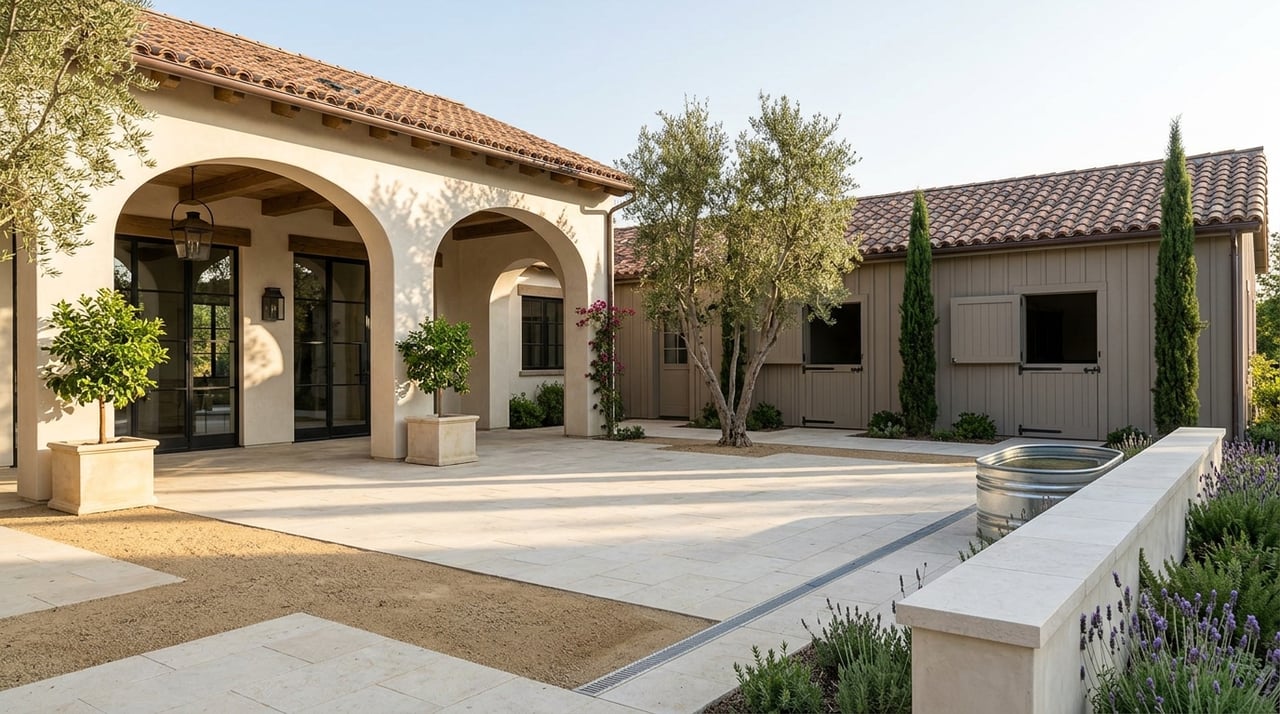
Looking for a place where horse property feels refined, private, and deeply tied to the land? In Rancho Santa Fe, the equestrian lifestyle is not just an amenity. It is part of the community’s identity. If you are exploring this market, it helps to understand how trails, lot sizes, design rules, and daily life all work together. Let’s dive in.
What makes Rancho Santa Fe unique
Rancho Santa Fe’s historic Covenant was established as a country residential community with an emphasis on agriculture and rural landscape preservation. According to the Rancho Santa Fe Association, the Covenant spans about 10 square miles, or 6,730 acres, and is home to roughly 4,300 residents. Average lot sizes are more than two acres, which is a big part of why the area feels spacious and estate-oriented.
That sense of place is intentional. California State Parks identifies Rancho Santa Fe as a historic planned community, and the area’s early development in the 1920s was unified by Spanish Colonial Revival architecture under Lilian Rice. Winding roads, larger parcels, and landscape-focused planning still shape how the community looks and lives today.
Why the equestrian lifestyle fits here
Rancho Santa Fe supports horse ownership in a way that feels residential rather than agricultural. You get the benefit of land, privacy, and riding culture without losing access to a village core, community amenities, and a polished estate environment. For many buyers, that balance is what makes the area so compelling.
The overall experience is defined by land, access, continuity, and control. Large lots create room for horse facilities, private trails support riding as part of daily life, and Association oversight helps preserve the area’s visual character. The result is a lifestyle that feels orderly, scenic, and distinctly Rancho Santa Fe.
Private trails shape daily life
One of the biggest draws for equestrian-minded buyers is the trail network. The Rancho Santa Fe Association describes nearly 60 miles of private equestrian and pedestrian trails in the Covenant, while the Rancho Riding Club references nearly 50 miles of equestrian trails maintained for members and guests. While the exact figure varies by source, both point to a substantial private riding network.
These trails are not public recreational paths. They are for residents and their guests, which helps preserve the private and residential feel of the community. Trail rules also make it clear that horseback riders are central to the system, with horses given the right-of-way.
Many trail segments run near the golf course and through a mix of forested areas, stream corridors, and view-oriented terrain. Some sections are wide enough for two riders side by side. That kind of infrastructure turns riding into a practical part of everyday life, not just an occasional outing.
Open space supports the rural setting
The equestrian feel of Rancho Santa Fe is reinforced by protected open areas. Covenant residents may use 68 acres of open space and nature at the Rancho Santa Fe Arroyo property, which serves as a buffer along the San Dieguito River. This helps maintain the natural rhythm and visual openness that many buyers are seeking.
Osuna Ranch adds another layer to that setting. The 25-acre historic property is described by the Association as a working horse ranch with walking paths, grass pastures, equestrian boarding, and a stable population of nearly 50 horses. Many of those horses are show horses or jumpers, which gives the ranch an active and established riding presence.
Osuna Ranch and riding resources
For buyers who want equestrian access but may not plan to keep horses at home right away, Osuna Ranch is especially important. The property includes multiple barns, paddocks, fenced grazing pastures, riding and exercise rings, grooming stations, a covered viewing area, and Hunter/Jumper lessons. It offers real infrastructure, not just scenic appeal.
The Rancho Riding Club is another long-standing part of the local riding culture. According to the Association, it has served riders since 1946 and offers instruction, camps, horse shows, and multiple disciplines. Together, these resources support a community where riding is woven into the lifestyle in a meaningful way.
Can you keep horses on your property?
This is one of the most common questions buyers ask, and the answer is specific. Horses cannot be kept on every property automatically. The Rancho Santa Fe Association requires an Art Jury permit before horses may be kept on residential property.
There is also a minimum lot size requirement. The Association’s animal-keeping code states that horses or bovine cattle require at least two gross acres, and residential property is generally limited to up to one animal per gross acre. That means parcel size matters, and so does the way the property is configured.
It is also important to understand the intended use. On residential property, horses are allowed for the owner’s personal pleasure and benefit. Commercial boarding, breeding stables, riding clubs, horse shows, and other commercial operations are prohibited on residential sites.
How equestrian estates are designed
In Rancho Santa Fe, horse amenities are expected to blend into the residential setting. The Association gives the Art Jury authority to review horse-related permits and enforce requirements for screening and separation. That review can apply to barns, stables, corrals, paddocks, riding rings, stalls, kennels, and related structures.
In practical terms, this shapes the look and feel of an equestrian estate. Instead of reading like a commercial stable, a well-designed property tends to feel like a private residential compound with horse facilities integrated into the land. For buyers who value both function and aesthetics, this is a major part of the appeal.
Architectural character matters
Rancho Santa Fe is known for visual continuity and restraint. The Association’s design materials note that residential projects may draw inspiration from Spanish Colonial Revival, California Ranch, understated Mediterranean, Monterey, and other Hispanic-influenced styles. That guidance helps preserve a cohesive identity across the community.
The broader design language is also tied to Lilian Rice and the area’s historic planning roots. Association materials describing the Village reference features such as low-pitched clay tile roofs, plain wall surfaces, arcades, courtyards, rounded edges, decorative ironwork, and lush landscaping. Even when homes vary in detail, the overall effect is calm, established, and consistent with the landscape.
What everyday living looks like
The appeal of Rancho Santa Fe’s equestrian lifestyle is not only about horses. It is also about how the day flows. According to the Association, residents have access to amenities that include trails, Osuna Ranch, the Golf Club, the Tennis Club, and open space, while the Village provides shops, restaurants, other commercial businesses, the historic Rancho Santa Fe Inn, and the Roger Rowe school campus.
For many residents, that means your day can include an early ride, errands in the Village, and time at a club or community facility without giving up the quiet, rural atmosphere that defines the area. That mix of convenience and land is rare. It is one reason Rancho Santa Fe continues to stand apart.
Privacy and community stewardship
Privacy is part of the lifestyle here, too. The Rancho Santa Fe Association states that preserving the community’s character, privacy, safety, and security is a top priority. It also notes that the area is served by private security patrol in addition to county sheriff and California Highway Patrol service.
For many buyers and sellers in Rancho Santa Fe, that stewardship matters. It supports a setting that feels protected, intentional, and carefully managed over time. When you are buying into a lifestyle-driven market, that long-term consistency can be just as important as the home itself.
What buyers should keep in mind
If you are exploring equestrian estates in Rancho Santa Fe, it helps to focus on a few practical questions early:
- Is the property within the Covenant?
- Does the lot meet the minimum size requirement for horses?
- Will the property need permits or design review for equestrian improvements?
- Do you want horses on-site, or would boarding access at Osuna Ranch better fit your lifestyle?
- How important is direct access to the private trail network?
These details can shape both day-to-day use and long-term value. In a market this specialized, thoughtful guidance matters.
If you are considering buying or selling a distinctive property in Rancho Santa Fe, working with a local advisor who understands design, land use, and lifestyle fit can make the process feel far more clear and strategic. To start the conversation, connect with Vanessa De Luca.
FAQs
Can you keep horses on any Rancho Santa Fe estate?
- No. In the Covenant, the Rancho Santa Fe Association requires an Art Jury permit, and the property must have at least two gross acres for horses.
Are Rancho Santa Fe equestrian trails open to the public?
- No. The private trail system is for residents and their guests.
Does Rancho Santa Fe offer horse boarding?
- Yes. Osuna Ranch is the community’s working horse ranch and includes equestrian boarding and training-related infrastructure.
What is Osuna Ranch in Rancho Santa Fe?
- Osuna Ranch is a 25-acre historic property owned by the Association that includes barns, paddocks, pastures, rings, grooming stations, lessons, and boarding.
Are commercial horse operations allowed on Rancho Santa Fe residential property?
- No. The Association’s animal-keeping rules state that horses on residential property are for the owner’s personal pleasure and benefit, and commercial operations are prohibited.
What style are Rancho Santa Fe equestrian estates known for?
- Many properties reflect Spanish Colonial Revival and other restrained, Hispanic-influenced architectural styles that align with the community’s historic design character.